
Rwanda launches new restoration project to strengthen climate resilience
Rwanda on Tuesday launched a restoration project aimed at restoring degraded ecosystems, strengthening climate resilience, and improving livelihoods for communities living in three districts of the southern province.
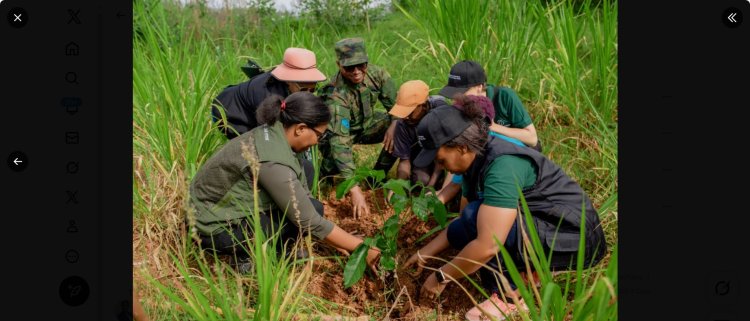

The project will restore forests, wetlands, riverbanks, and degraded landscapes across parts of Nyanza, Ruhango, and Nyamagabe districts, helping to reverse ecosystem degradation while improving the resilience of communities to climate-related shocks in what is called Nyungwe–Ruhango corridor.
The project is supported by the Global Environment Facility (GEF) and implemented with technical support from the World Bank.
It will run from 2025–2030 as part of Rwanda’s broader efforts to promote sustainable landscape management and nature-based solutions under the Green Amayaga Program, according to a statement by the Rwanda Environment Management Authority (REMA).
Key interventions will be undertaken during the project implementation. These include afforestation and reforestation, wetland and riverbank rehabilitation, agroforestry promotion, sustainable land management practices as well as promotion of nature-based livelihoods and green jobs, particularly for youth and local enterprises.
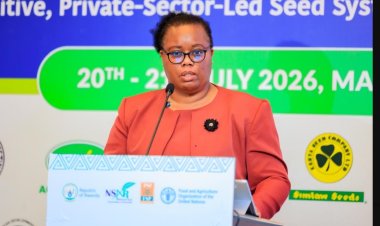
“Nyungwe–Ruhango Corridor Restoration Project is part of Rwanda's programmatic approach to landscape restoration. By expanding the work initiated under the Green Amayaga Project, we are scaling up ecosystem restoration efforts that protect biodiversity, reduce climate risks, and support sustainable livelihoods,” Juliet Kabera, the director general of REMA said.
Officials said by restoring critical ecosystems and strengthening sustainable land management, the project will contribute to reducing climate risks such as floods and landslides, improving agricultural productivity, and protecting biodiversity in one of Rwanda’s most ecologically important landscapes connected to Nyungwe National Park.
The targeted corridor is said to be facing increasing environmental pressures including soil erosion, land degradation, biodiversity loss, floods, and landslides, which threaten ecosystems, agricultural productivity, and rural livelihoods.
“Through ecosystem-based restoration and climate-smart land management practices, the project will help stabilize landscapes, protect biodiversity, and safeguard ecosystem services that communities depend on,” REMA said.