
Rwanda launches national integrated malaria genomics surveillance platform
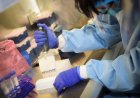
The Rwanda Biomedical Centre (RBC) launched Saturday a national integrated malaria genomics surveillance platform set to generate high-quality evidence to inform national policies on malaria diagnostics, treatment, and control, according to a statement.


The launch coincided with this year’s World Malaria Day which falls on April 25.
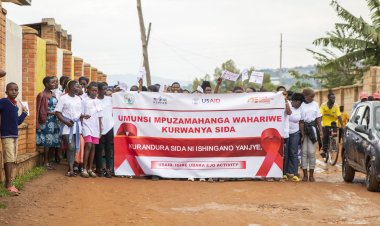
To mark the day, RBC together with partners in malaria control joined residents of Gahanga sector, in the capital Kigali’s Kicukiro District in a special monthly community work locally known as Umuganda.
During the event, participants engaged in cleaning activities by removing mosquito-breeding sites, distribution of mosquito nets and awareness messages for malaria prevention and control towards elimination.
The day was marked under the theme “Driven to End Malaria. Now we can. Now we must.”
In the statement, RBC said the newly launched platform reinforces Rwanda’s leadership in precision public health by embedding advanced molecular surveillance into routine health systems, from the community to the national level.
Supported by a three-year grant from the Gates Foundation, the initiative aims to establish a routine, national malaria surveillance system, to enable early detection and continuous monitoring of diagnostic and drug resistance markers.
“The integration of genomic surveillance into Rwanda’s routine health system represents a paradigm shift toward precision public health interventions. By linking community-level epidemiological intelligence with high-resolution molecular data, we are strengthening our capacity to detect and respond to evolving malaria threats in near real time,” RBC’s Director General Claude Mambo Muvunyi, said in the statement.
He explained that the new platform enables continuous monitoring of therapeutic efficacy, including emerging resistance to artemisinin combination therapies such as artemether-lumefantrine, driven by genomic changes in Plasmodium falciparum, and supports the optimization of Rwanda’s multiple first-line therapy (MFT) strategy.
“This approach establishes a sustainable foundation for integrated, multi-pathogen surveillance in Rwanda and beyond,” he said.
According to RBC, the platform will generate high-quality evidence to inform national policies on malaria diagnostics, treatment.
While building on more than three decades of Rwanda’s community health program, the platform leverages a nationwide network of Community Health Workers (CHWs) to deliver real-time, high-resolution surveillance.
RBC said the implementation is underway across all 30 districts, with 30 sentinel sites and 60 villages, alongside planned expansion to 30 private health facilities in each district.
The integrated model links community-level data collection with centralized genomic analysis, enabling rapid detection of transmission dynamics and emerging resistance patterns, it noted, adding that the program also represents a major investment in national capacity.
To implement integrated surveillance, a total of 60 community health workers, 90 laboratory technicians, and 10 laboratory scientists at regional hubs alongside central level program staff will be trained and equipped with the necessary skills.
Additionally, four Master’s students, one PhD candidate, and one postdoctoral researcher will be supported to advance expertise in genomic epidemiology.
The RBC called on development partners, research institutions, and private-sector stakeholders to collaborate in scaling the model across disease areas.
RBC latest data shows that malaria cases fluctuated in recent years, rising from 610,832 in 2023–2024 to 1.1 million in 2024–2025, before reducing to 928,616 in 2025–2026.