
Rwanda calls for joint efforts to safeguard planet's natural heritage
There is a need for collective efforts to safeguard the planet's natural heritage, a senior Rwandan official said.
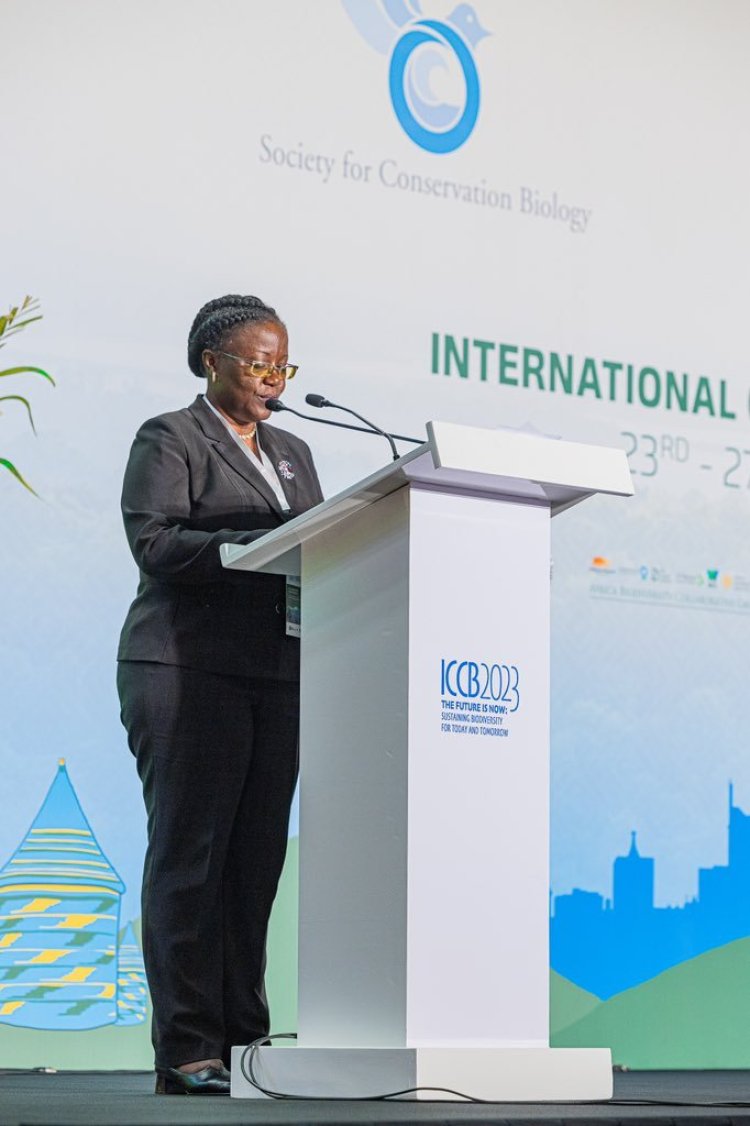

Jeanne d’Arc Mujawamariya, the Rwandan Minister of Environment said this in remarks to delegates attending an International Conference on Conservation Biology which opened Sunday in Kigali, Rwanda’s capital city.
The conference will run from July 23-27, under the theme the “Future is Now: Sustaining Biodiversity for Today and Tomorrow” with participants discussing challenges and exploring innovative solutions to address pressing conservation issues.
“Biodiversity is not a luxury, it is the essence of life itself. It is about time that we humans connect nature and climate together,” said Mujawamariya.
“Let us join hands to safeguard our planet's natural heritage and forge a sustainable and resilient future where harmony with nature prevails. Together, we can make a lasting difference,” she said.
The conference drew more than 1,000 people from 93 countries, according to the Rwandan Ministry of Environment.
Participants include conservation professionals, researchers, policymakers, and students from around the world, convened to exchange knowledge, experiences, and best practices in conservation biology.
Mwezi Badru Mugerwa, the chair of this year’s conference and president of the Society for Conservation Biology, Africa Region, said the forum offered a unique opportunity to host leading conservation scientists and practitioners.
He said it would inspire future generations of African conservationists working to conserve Africa’s threatened biodiversity.
Policymakers are expected to use the platform to develop effective policies through engaging discussions and policy forums, leveraging scientific knowledge to guide conservation actions worldwide, according to organizers.
Capacity building initiatives will also empower early-career researchers and practitioners, while the showcasing of successful conservation initiatives will inspire participants to take proactive steps and implement practical solutions within their own regions.
The first International Conference on Conservation Biology was held in 1988 in Montana, U.S.
The conference is organized by the Society for Conservation Biology, which serves as the premier international membership society for professionals, students and non-profits dedicated to advancing the science and practice of conserving biodiversity.