
Burundi gets $261 million IMF loan
Burundi has received $261 million from the International Monetary Fund (IMF), the first since 2015 that will go towards supporting its economic recovery.

The announcement followed meetings between the IMF team led by Mame Astou Diouf, the Mission Chief for Burundi, who visited Bujumbura in February.
In a statement, the IMF said together with Burundian authorities, it had reached a staff-level agreement on a 40-month arrangement under the Extended Credit Facility (ECF) with access of $261.7 million.
The facility provides medium-term financial assistance to low-income countries (LICs) with protracted balance of payments problems.
“This is the first Upper Credit Tranche-quality program for Burundi supported by the Fund since 2015. The program aims to support a calibrated macroeconomic policy mix to restore external sustainability, strengthen debt sustainability, while supporting economic recovery from shocks and creating fiscal space for accelerated and inclusive growth,” IMF said.
It added that discussions held with the Burundian authorities covered recent macro-developments, the impact of the various domestic and external shocks and Burundi’s macro-policy plans and structural reform agenda.
Burundi’s economy has been hit by several shocks, affecting its recovery from the negative effects of the Covid-19 pandemic and heightening its macroeconomic imbalances.
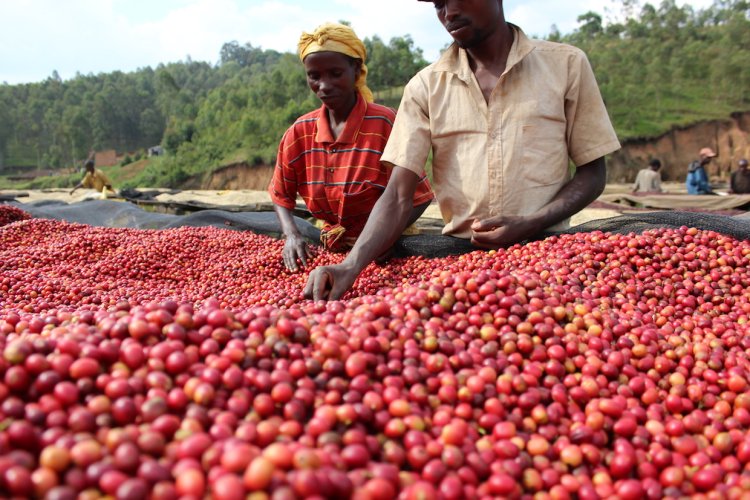
Delayed rainfall in the last quarter of 2022 and limited availability of fertilizer, driven by higher prices in the context of limited foreign exchange (FX) availability for imports, supply disruptions linked to the war in Ukraine, and insufficient domestic production to cover local farmers’ demand hampered agricultural production.
Outbreaks of the rift valley and porcine fevers impacted Burundi’s livestock production.
Higher import prices triggered by the war in Ukraine have pushed up inflation, widened the fiscal deficit, and heightened current account pressures.
“Real GDP growth is estimated to have slowed down to 1.8 percent in 2022 (from 3.1 percent in 2021) but is projected to rebound to 3.3% in 2023,” the Fund said.
Like many countries in the East African region, delayed harvest and lower crop of 2022 will impact agricultural production in 2023 owing to reduced land and seed availability.
Burundi’s inflation averaged 18.9% in 2022 and has continued accelerating (28.6% year-on-year at the end of January 2023), driven by food prices.
“It is projected to remain high, at around 18% in 2023,” IMF said.
With the support of the ECF arrangement, Burundi plans to have a broad-based near- and medium-term macroeconomic reform agenda aimed at tackling key challenges.
Burundi’s fiscal position is projected to weaken in the 2022/23 financial year owing to slow revenue collection from measures adopted in the last two budget laws and spending overruns including large fertilizer subsidies, according to the IMF.
The IMF said that a return to fiscal consolidation is planned starting in the 2023/24 financial year, building on strengthened revenue collection efforts and current spending restraint while preserving social spending and efficient investment scaling up under the authorities’ Public Investment Plan.
“External rebalancing and unwinding monetary financing. The central bank (BRB) is committed to recalibrating monetary and external policies to address the below-adequacy FX reserves (1.5 months of imports at end-2022) and large parallel FX market premium. In preparation for the external rebalancing, the BRB has initiated FX market liberalization and reduced financing provision to commercial banks. This will also help curb inflation pressures. Limiting BRB financing to the budget will also be essential,” it said.